Where leads arrive
Forms, calls, texts, ads, and other sources should reach one clear place.
We connect forms, calls, texts, email, and your CRM around the way your team already works. Routine messages and reminders happen on time. The conversations that need judgment go to a person with the right context.
Starts with a free call about how leads enter, move, and get followed up today.
See what we map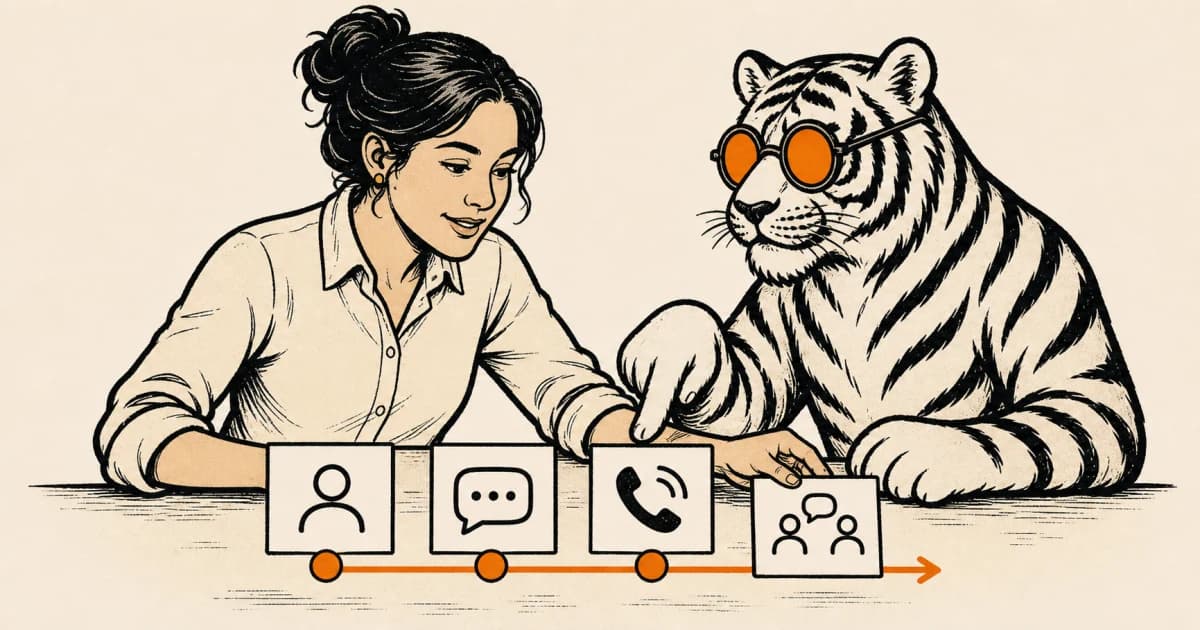
Where we start
We begin with the real lead path, not a list of tools. The system has to fit the way your team sells and serves customers.
Forms, calls, texts, ads, and other sources should reach one clear place.
Each stage needs a person or rule that owns the next step.
Collect only the details that change fit, routing, or the response.
Routine replies, reminders, updates, and review requests can move automatically.
Trust, objections, exceptions, and important decisions stay with a human.
A failed message or stale lead should surface before the opportunity is lost.
Then we decide what to keep, connect, replace, or automate. The system is built around your business, not a generic template.
See when a spreadsheet is still enough and when a CRM becomes the safer choice.
Human handoff
AI can acknowledge a new inquiry, collect useful details, send reminders, draft a reply, and keep routine information up to date.
A person should own fit, trust, objections, sensitive details, and anything unusual. The handoff should say who needs to act, what they need to know, and what happens if nobody responds.
The point is not to remove people. It is to give them more time for the work only they can do.
Review automation
After a completed job, the system can send an honest review request and follow up when it makes sense. It stops when the customer responds or opts out.
The timing follows the way your business already works. Your team gets a consistent process without remembering each request by hand.
Monitoring
Turning an automation on is not enough. We watch for missed messages, duplicate contacts, stale leads, failed handoffs, and more work than the team can handle.
Limits and stop controls keep one fault from becoming a larger customer problem. Regular checks compare the automation with the real CRM so drift can be found and fixed.
What we track
Each step proves something different. We keep them separate so a sent message never gets reported as a sale.
The lead reached the business with the details needed to respond.
The right message or reminder went out at the right time.
A person received the conversation and the context behind it.
The business confirmed that the lead fits.
The appointment, job, payment, or chosen business result was recorded.
Tell us how inquiries arrive and where follow-up slows down. We'll map the path and show you what should move automatically.
Book a free call